Thursday, February 21, 2019

Blog #4 - Building a Collaborative Culture

Chapter 4 of The Connected Educator focuses primarily on building a collaborative culture within a given work space. Putting relationships first is of the upmost importance. "Fostering, nurturing, and maintaining positive, congenial relationships is the first step toward building collaborative cultures..." (pg 59). Creating and evolving these relationships within the work space creates a more open and diverse atmosphere among co-workers. These relationships are broken down into congenial, a more private and personal relationship that is open and conversational verses collegiality " a shared belief that none of us is as good (or smart) as all of us.." (pg. 59). While it is important to create open and honest relationships with a team, it is also important to share information, improve on an idea and expand each and every team members knowledge of each task at hand. The chapter continues this central idea by explaining the four stages of collaboration as seen on page 67.
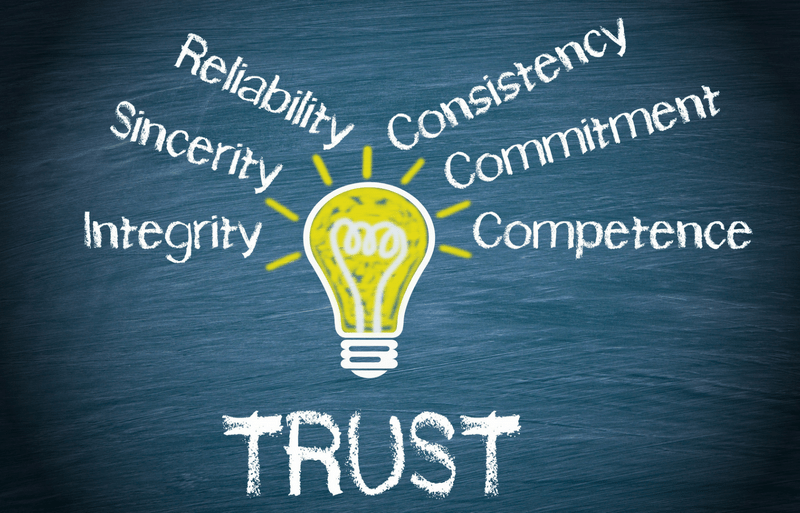
Image result for trust

                  In my future career as a social worker, I plan to work with several teams when managing different cases. I also plan to work one on one with clients and I strongly believe that the four stages of collaboration will benefit my work with my team and/or client. As a leader I plan to let my team learn about one another, find our weaknesses and strengths to help us create new ideas and plans. This will lead the team to understand how we work together as whole and perform as one group, not a number of individuals.

Image result for collaboration

Going beyond these four stages, I expect myself as well as my team to grow and expand our limits. Establishing trust, will open doors with both my clients and team. With trust we can explore new ideas, make a plan and create a open and safe environment to improve our overall responsibility of our cases. Keeping an eye out for what we post and who our connections are online will help us form a stronger bond within our team as well as our clients. I plan to lead my team willingly by fostering collegiality. This means applying new ideas, allowing change and finding solutions. To have a strong team, one needs a strong leader. I hope to use a sense of change, trust and collaboration with any and all of my clients and my team to be successful within my career.

                                                              Related image

                                                                         References:
Nussbaum-Beach, S., Ritter Hall, L. (2012). The Connected Educator. Bloomington, IN: Solution Tree Press

Sunday, February 17, 2019

Blog #3 - Using Tools to Support Connected Learning

Chapter 5 of The Connected Educator details certain tools that can be useful when working in a professional setting. Chapter one details the specifics of social bookmarking with tools such as Diigo and Delicious, both of which can let users keep track of important information found when researching and bookmark it to find it later if needed. Continuing on the reader then finds tools used for connecting and working with others within their field. An application that can often be used for this is Google Docs. This app lets the user type information, insert pictures and/or diagrams if need be. They can then share this information with chosen people through an email address. Google docs can also be accessed through a smartphone in case the editor(s) are not near their computer of choice.


The last set of tools this chapter introduces are extended learning tools. Netvibes is one tool used to gather information that is happening in the users social web and keep it all in one place. Teachers often use these tools to keep all their information together to present in a classroom setting. This also helps keep connections with other users and keep information available on a need to access basis.


As mentioned before, Google docs is one of the most shared websites when it comes to sharing and being able to document information. Google docs would be the most beneficial source when it came to my future career as a social worker. Being able to input information on a case or client and share it immediately with my team is a very important aspect of the job. With Google Docs I can input any information and share it immediately with my team. I can then invite then to edit the document as well, allowing my team to add any information where need be. This app is also convenient where my team and I can access it any time with the mobile app.

                                                                                         
What apps or sites can we use as students to help further our knowledge and keep us connected? What would you use to stay connected with your classmates or future co-workers?


                                                                            References:
Nussbaum-Beach, S., Ritter Hall, L. (2012). The Connected Educator. Bloomington, IN: Solution Tree Press.


Thursday, February 7, 2019

Smackdown!

For my smackdown app, I have chosen the Safety Plan App. As a future social worker, I will often handle cases related to mental health with my clients. These include but are not limited to, anxiety attacks, panic attacks and suicidal thoughts. The Safety Plan app is a tool used to create a back up plan for the client to access at any possible time. Through this app the client can manage their contacts, recovering ideas and many other important tools that will help them in their recovering and prevention process.

This app contains several useful tools that can help the clients I plan to one day work with as well as myself while continuing my education. Throughout college there are often students who have mental health issues and the Safety Plan app can help those students as well. The app contains information that can help you when you are having thoughts or having an attack. When first downloading the app, you are able to download contacts to call in an emergency, input ways to help you in a crisis such as calling a friend or even breathing slowly. The app also includes many resources such as online therapy in the case that the client or student cannot commute to a different source for any reason.

I strongly believe that the Safety App will help many students and clients regardless of age or mental health issues. The app is a tool to have when you have experienced or are newly experiencing mental health issues. As a social worker I plan to use this app to make sure my clients are safe at all times and that they feel they have more than one option when facing difficult obstacles.


https://docs.google.com/presentation/d/1DFCH4yZJxqXQZ9QAwz1CcjO4rY7cFxzWkAfZH74KLks/edit#slide=id.p

Sunday, February 3, 2019

Blog #2 - Building Your Connected Learning Community

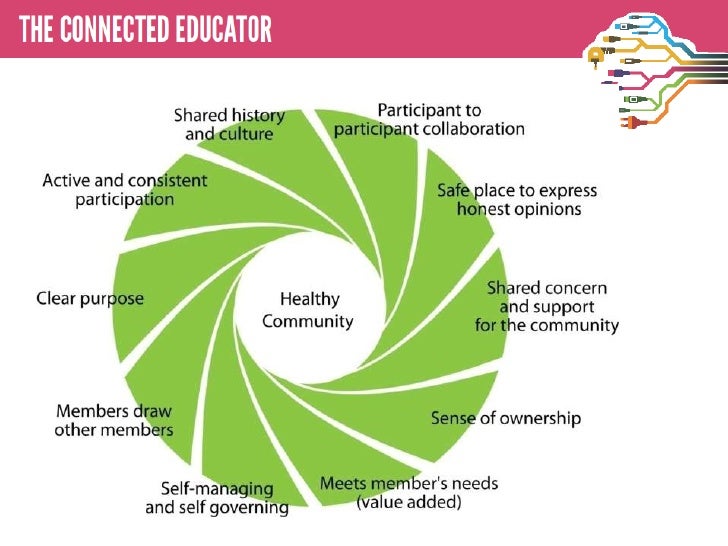
Throughout Chapter 6 of The Connected Educator the reader learns the importance of creating one's personal network, mainly through online tools such as twitter, blogs, etc. Throughout social media we can evolve our personal networks by following people we know, following people who have a similar career or life interest and start a strong connection through just a few people. As some of the mentioned people within this chapter mention, you can keep your connections small such as 150, or be open to as many as people as possible creating no limit for the connections around you. This chapter suggests that although you may know a person through a friend or co-worker, you may want to get a background check on them, validate their information and dig a little deeper to see how they could impact your life. Staying involved in an active community involves a much deeper insight than one may presume. To create and balance a well organized balance a community needs a shard history and culture as well as one on one interaction that involves a clear purpose. The reader can see more in depth points in the diagram below.

Image result for the connected educator healthy community diagram


 The chapter also suggests that we as people who want to create stronger connections, also keep caution as to who these people are, what they do and how much they can impact our point. As a future social worker I may not want to use an app such as Twitter to connect to my team or to my clients and/or said case. Instead I may want to connect through an app such as the Savvy Social Worker app where I can follow social work channels that update their info on a regular basis and also find information to improve my own field work and practice. Beyond this I can communicate the found information with my team or manager through Slack. This creates a strong advantage to keep the team up to date on new ideas and how we can also improve our approach when dealing with clients and certain cases. As Chapter 6 suggests, as learners we should always be open to new ideas and learning new things to improve not only our minds, but the minds of others working with us as well.

What tool would YOU use to benefit your career or learning experience?
                                                          Image result for the savvy social worker app

                                                                         References:
Nussbaum-Beach, S., Ritter Hall, L. (2012). The Connected Educator. Bloomington, IN: Soultion Tree Press.